
Workers ignore safety meetings not because they don’t care—but because the content feels routine, disconnected, or irrelevant. The difference between a forgotten 10-minute huddle and a life-changing safety intervention often comes down to one thing: the topic.
Safety toolbox topics in PDF format are more than just printable handouts. When curated with precision, they become frontline tools for changing behavior, reinforcing procedures, and creating a culture where safety is spoken—not posted. This guide cuts through the noise to deliver high-impact topics, realistic implementation strategies, and actionable PDF resources that work in real-world environments.
Why Safety Toolbox Topics Matter (And Why
Most Fail)
Toolbox meetings, also known as tailgate or safety briefings, are short daily or weekly discussions focused on specific hazards and best practices. They’re designed to be quick—5 to 15 minutes—but their impact should last all shift.
Yet many fall flat. Meetings fail not due to lack of effort, but due to poor topic selection. Generic themes like “Be Safe” or rehashed accident reports with no actionable takeaways lead to disengagement.
- Effective safety toolbox topics do three things:
- Address a current, site-specific risk.
- Provide clear, actionable guidance.
- Encourage worker participation.
For example, instead of “Electrical Safety,” a stronger topic is: “How to Spot Damaged Extension Cords Before You Plug In.” The specificity increases relevance and recall.
PDFs of these topics allow supervisors to standardize content, ensure compliance documentation, and distribute materials across shifts—making them indispensable in high-turnover or multi-site operations.
Most Impactful Safety Toolbox Topics in PDF Format
The best PDF toolbox topics are modular, visual, and focused. Below are high-performing themes, commonly found in downloadable safety meeting kits, that address real hazards across industries.
#### 1. Slips, Trips, and Falls – Especially at Ground Level Despite protective gear, most falls happen on the same level—wet floors, cluttered walkways, uneven pavement. A strong PDF covers: - Common causes (e.g., trailing cables, spilled liquids) - Housekeeping responsibilities - Proper footwear selection Use case: A warehouse team reviews a PDF before shift change, identifying three new tripping hazards near loading docks.
#### 2. Proper Use of PPE – Beyond the Basics Many workers wear PPE incorrectly or inconsistently. A focused session on “When and How to Wear Safety Glasses” or “Respirator Seal Checks” reinforces compliance. Include: - PPE limitations - Maintenance and inspection - Task-specific requirements Common mistake: Assuming hard hat suspension systems last forever—most degrade after 2–5 years.

#### 3. Hazard Communication and GHS Labels With global chemical standards in place, understanding GHS pictograms is non-negotiable. A quality PDF includes: - Breakdown of each symbol (flame, skull, corrosion) - How to read Safety Data Sheets (SDS) - Real-world spill response steps Tip: Pair the PDF with a live label-matching exercise using on-site chemicals.
#### 4. Working in Confined Spaces This high-risk area demands clear procedures. A toolbox PDF should outline: - Definition of a confined space - Permit requirements - Rescue planning Limitation: Many PDFs skip ventilation checks—always verify air quality protocols are included.
#### 5. Hot Work Safety (Welding, Cutting, Grinding) Fire risks are often underestimated. A solid topic PDF includes: - Flammable material clearance distances - Fire watch responsibilities - Extinguisher placement Realistic scenario: A fabrication shop uses the PDF to audit fire extinguishers weekly.
#### 6. Back Safety and Safe Lifting Techniques Even office workers lift boxes. This evergreen topic gains traction when focused on technique, not just “lift with your legs.” Enhance with: - Ergonomic adjustments - Team lift coordination - Use of mechanical aids Engagement tip: Have workers demonstrate lifts—correct form sticks better than theory.
#### 7. Job Site Housekeeping Clutter kills. A targeted PDF emphasizes: - End-of-day cleanup routines - Designated waste and scrap areas - Shared accountability Workflow win: Tie housekeeping to shift handover checklists.
#### 8. Mental Health and Alertness on the Job Often overlooked, fatigue and stress contribute to incidents. Forward-thinking PDFs now cover: - Signs of impaired focus - Peer check-in strategies - Resources for help Note: Keep this non-stigmatizing—focus on performance, not diagnosis.
How to Source or Build Effective Safety Toolbox Topics PDFs
You don’t need to create everything from scratch. But not all free PDFs are equal. Here’s how to vet or develop high-quality content.
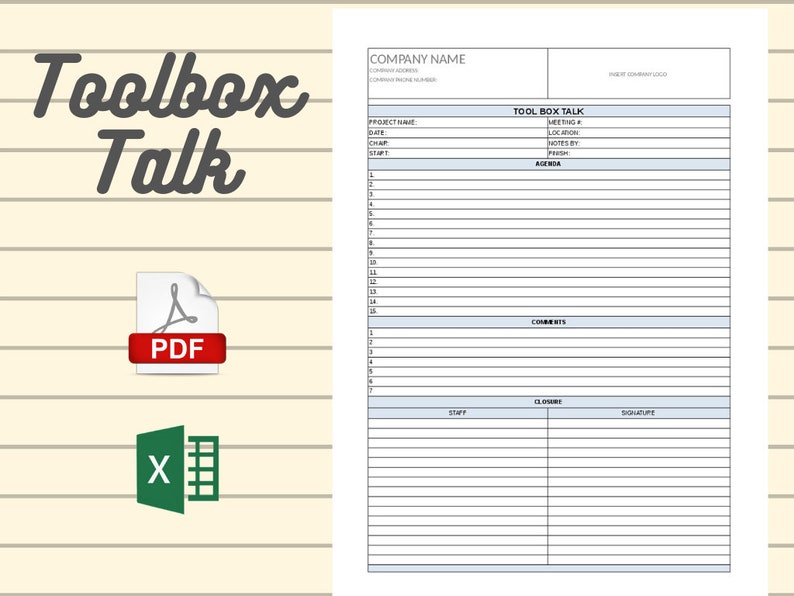
Look for these features in a reliable safety toolbox PDF: - Clear headings and bullets – easy to read aloud - Visuals or diagrams – e.g., proper lifting posture - Discussion questions – prompts like “Have you seen this hazard here?” - Sign-off section – for attendance and acknowledgment - OSHA or ANSI alignment – especially for compliance-critical industries
Many companies use third-party safety portals to download pre-approved PDFs. Others customize templates using tools like Canva or Microsoft Word to match branding and site risks.
Workflow Tip: Assign a safety champion each week to review and present a PDF topic. Rotate responsibility to boost ownership.

5 Trusted Sources for Safety Toolbox Topics PDFs
| Source | Key Features | Best For |
|---|---|---|
| SafetyInfo.com | 100+ free PDFs, OSHA-aligned, printable | General industry, construction |
| Creative Safety Supply | Visual-heavy, includes posters and quizzes | Manufacturing, facilities |
| OHS Canada Toolbox Talks | Bilingual (EN/FR), sector-specific | Canadian operations |
| SafeStart | Behavior-based, cognitive focus | High-risk environments |
| SafetyCulture (iAuditor) | Editable templates, digital sign-offs | Teams using mobile audits |
These aren’t just static documents. Integrated into digital platforms like SafetyCulture or Procore, PDF topics become part of a larger safety ecosystem—tracked, updated, and auditable.
Common Mistakes When
Using Safety Toolbox PDFs
Even great content fails with poor delivery. Avoid these pitfalls:
- One-size-fits-all topics – A PDF on trench safety won’t resonate with office staff. Customize or segment.
- No follow-up – If a hazard is identified, document and resolve it. Otherwise, workers lose trust.
- Reading verbatim – PDFs are guides, not scripts. Encourage discussion.
- Stale rotation – Repeating the same 10 topics quarterly breeds complacency.
- No translation – In multilingual teams, untranslated PDFs create gaps in understanding.
Pro Insight: Print isn’t always best. On sites with smartphone access, share PDFs via email or app so workers can review later.
Turning PDF Topics into Real Behavioral Change
A toolbox meeting isn’t successful because it happened—it’s successful when behavior shifts.
To maximize impact: - Link topics to recent near-misses. If someone almost slipped yesterday, make today’s PDF about floor hazards. - Use the “What If?” method. After reviewing a PDF, ask: “What if that faulty ladder was yours?” - Post summaries. Print key visuals from the PDF and display them near relevant work areas. - Track trends. If back injuries spike, run a 4-week series on lifting safety with different PDFs each week.
Example: A roofing crew reduced hand injuries by 40% after running a month-long “Glove Check” campaign using weekly PDFs on cut-resistant gear, inspection, and replacement schedules.
Final Thoughts: Make Safety Stick
Quality safety toolbox topics in PDF form are more than administrative checkboxes. They’re opportunities to stop incidents before they happen.
The best ones don’t just inform—they provoke conversation, clarify expectations, and reinforce that safety is a shared responsibility. Whether you’re downloading from a trusted library or building your own with real crew input, focus on relevance, clarity, and action.
Action Step: Download or create one new, hyper-relevant safety toolbox PDF this week. Run the meeting in the field, not the office. Ask one open-ended question. Document the feedback. Repeat.
Safety isn't scheduled. It's sustained.
Frequently Asked Questions
What are common safety toolbox meeting topics? Slips and falls, PPE use, hazard communication, confined space entry, hot work, lifting safety, and housekeeping are among the most common and effective.
Are safety toolbox talks required by OSHA? OSHA doesn’t mandate toolbox talks specifically, but they support compliance with regulations like hazard communication, PPE, and fall protection through documented training.
How long should a safety toolbox meeting last? Ideally 5 to 15 minutes—focused and frequent, not lengthy or rare.
Can toolbox meeting PDFs be used for training records? Yes, if they include space for attendee names, signatures, dates, and topic summaries. Always keep them on file.
How often should toolbox meetings be held? Weekly is standard in high-risk industries, but daily meetings are common on active construction sites.
Should toolbox topics be the same for all teams? No. Customize topics to the crew’s tasks, environment, and recent incidents.
Where can I download free safety toolbox topics in PDF? Reputable sources include SafetyInfo.com, Creative Safety Supply, and OSHA’s official website, which offers customizable outreach materials.
FAQ
What should you look for in Top Safety Toolbox Topics for Effective Workplace Meetings? Focus on relevance, practical value, and how well the solution matches real user intent.
Is Top Safety Toolbox Topics for Effective Workplace Meetings suitable for beginners? That depends on the workflow, but a clear step-by-step approach usually makes it easier to start.
How do you compare options around Top Safety Toolbox Topics for Effective Workplace Meetings? Compare features, trust signals, limitations, pricing, and ease of implementation.
What mistakes should you avoid? Avoid generic choices, weak validation, and decisions based only on marketing claims.
What is the next best step? Shortlist the most relevant options, validate them quickly, and refine from real-world results.


:max_bytes(150000):strip_icc()/GettyImages-21696356521-4fbe8ad077b44dd89725c2f789cb6716.jpg)